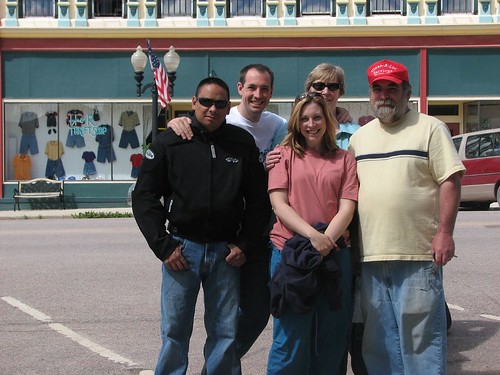
Last week was another interesting one in my life (for me at least).
HEALTH/STRESS: It began Sunday with wrenching stomach pains and other things a bit on the gross side in Gozo, where I was vacationing. It could have been 'too much sun' from our day out Saturday, or food poisoning as my GP (doctor for y'all in the US) here diagnosed on Thursday. It could also have been just another turn in that Adrenal Fatigue thing I may have. With this I seem to have nearly all of the listed symptoms.
~
PHD UPDATE: Once back in London I had a meeting with my advisors- a brainstorming session that would hopefully set me on track for the summer to work on my own from the states. It was fantastic. I came away wishing I could somehow smuggle Professors Keown and Caygill in my back pocket back to the states (just pop them out once a week for more brainstorming and pep-talks) :) I'll have to post more on the details, but we came away with a further plan/outline for my thesis, something like:
Methodology
Literature Review
Ethics as a Path
Buddhism (from greed, anger, delusion toward freedom from these)
Kant (from drives, desires and inclinations toward freedom/autonomy)
Case studies: perhaps death and dying, perhaps sex with animals (ha! apparently a bit of an issue for both early Buddhists and Kant - should make for juicy discussion)
I can't wait to be rested enough and have the time to really dig in!
~
TRAVELS: Now I'm very happily in Bristol, where I did my Buddhist Studies MA. I'm staying with my good friend SJ, who was a housemate of mine back then. I've had the pleasure to meet up with old coursemate Mary and her boyfriend Alex yesterday and today I've just met up with Ken Robinson, a fascinating retired gentleman who has made a home for himself in the Buddhist Studies department here in Bristol. Tomorrow I'll hopefully see my old advisor, Paul Williams, and meet several of the new students before catching a bus back to London.
~
BLOGISATTVAS: In much more lighthearted good news, I have won a pair of Blogisattva Awards this year. I won a couple in 2006, the inaugural year for them, and was nominated for a few last year. So it was quite a lovely surprise to come up as a winner again this year. I should note that I was on this year's selection committee (but abstained in all cases from voting for myself - of course). The above link will give you the full list of winners - I highly recommend them all! My own awards came in the form of:
Best New Blog, 2007: Progressive Buddhism, a group blog with contributions by Ordinary Extraordinary [Justin Farquar], WH [William Harrison], Nacho Cordova, Buddhist_philosopher [Justin Whitaker], odin [Paul Jahshan], Tom [Tom Armstrong], and Joe in 2007.
Best Achievement Blogging on Matters Philosophical or Psychological [blog, blogger]: American Buddhist [the combination of American Buddhist Perspective (1/1-9/23/07) & American Buddhist in England (9/23-12/31/07)]; Justin Whitaker
I'm most surprised by the Political Post award, as it is typically a subject I avoid (half jokingly I'd say I don't talk politics unless I have either lots of energy or lots of alcohol in me). But I do keep up on the news and did see something recently that made me smile. It was when Hilary Clinton said during a debate something to the effect of, "whatever happens next, I am proud to be here on stage with BarackObama." Now, while everyone and his sister seems to have their own (often cynical) spin on this, I found it to be very beautiful, like a moment of genuine humanity in the otherwise very cruel and ego-driven game of politics. Of course soon enough they were back at it, but that is the nature of samsara, isn't it?
I, for one, will do what I can to see Obama in office next January. But first - the countdown on the right is telling me I have 3 days, 3 hours, and 3 minutes before I touch down in DC - a far more important milestone in my little life for the time being.
Today's words from the Dalai Lama calendar from my brother are worth meditating on:
If a person's basic state of mind is serene and calm, then it is possible for this inner peace to overwhelm a painful physical experience. On the other hand, if someone is suffering from depression, anxiety, or any form of emotional distress, then even if he or she happens to be enjoying physical comforts, he will not really be able to experience the happiness that these could bring.
The point here, I take it, is that what is 'out there' around us is not nearly so important as what is 'in here' in our own minds. Dharma teachers are often quick to tell stories of travels in India and Tibet, amongst the poorest people of the world, where they were greeted with kindness and joy - and often gifts - in contrast to the folks in wealthy western countries where people are stingy and cynical.
Yet I think it is equally important to state that we all need good conditions to cultivate the serenity and calm which is naturally inherent within us. Even a Pope or Dalai Lama, in the midst of utter chaos, will find life incredibly difficult. Think of the sixth Dalia Lama, raised in turbulent times, shrouded even from potential teachers for many years, a virtual prisoner well into his teens. Or of Pope Pius XII in the chaotic years of WW II.
We all need the initial conditions for happiness: some degree of peace and quiet, safety and sufficient nourishment. But beyond these, and these are amazingly readily available if we search for them, it is upon us to do the work of cultivating the inner peace which is the mark of the sage, the yogi, the sensai.
In are difficult times, it is always fair to seek greater comfort. This is part of our human nature and the realization that we all have difficult times. Even as hard as it is to seek help, it is equally wonderful to be asked, and to be trusted in another's time of need. This is the beauty of humanity: we care for each other. Even when our reasons escape reason, we care. And we want to help.
For about six months now, I've been a subscriber to Dr. Mercola's twice weekly newsletter, thanks to a recommendation by Kelly's friend, Liz, on their blog. I would very strongly recommend it myself; his no-nonsense advice and copious research, not to mention headlines like Soft Drinks: Disease in a Can have won me over.
One of Dr. Mercola's commonly discussed topics is the fact that most of us in the developed world do not get enough sunshine. That's right, not enough. I don't know about you, but I grew up with the message that 'too much sun can give you cancer' but nobody told me that 'too little sun can give you cancer too' - until now (another article, and another). And for the cancer we do get, the most common cause is our poor diet (too much processed food, filled with too many - sometimes carcinogenic - additives).
But, beyond cancer, too little sunshine obviously puts many of us (myself included) into quite a funk. As for dealing with these winter blues, Dr. Mercola has some great suggestions:
Get sun! A light-box or full-spectrum light bulbs will also help. Two years ago I flew to Hawai'i for a week and felt like I was walking on clouds for about three weeks even back in Missoula. In six days I'll be visiting friends on the tiny island of Gozo, Malta, where the forecast is for plenty of sunshine and highs in the 60s. And I've just ordered a six-pack of the above bulbs for Kelly in DC.
Exercise more - and keep it fun. Even when I don't feel like it, I still manage to get to the gym four or five days a week. Sometimes I'm there for as little as 20minutes, but even then I feel good that I went. Often enough, though, I manage 40minutes to an hour and walk out feeling really great.
Avoid comfort foods! Starchy/sugary foods actually stimulate quick bursts of serotonin (the 'good mood' hormone) in our brains, so we do feel good when we eat them. But it's a short-lived high, followed by a blood-sugar crash and (often enough) feelings of guilt for our indulgences. Eat more fresh veggies - green stuff especially.
Sleep! Our bodies follow the rhythms of the day pretty darned well, producing the 'sleep hormone' melatonin earlier as the days grow shorter. Unfortunately, most of us have lives and schedules that don't allow us to listen to our bodies and sleep more in winter months. Change this! Cut back activities in the darkest winter months as much as possible - your body, moods, and friends will thank you for it.
Get more Omega 3s. These are fats (that's right, you're supposed to eat more fat!) found most commonly in fatty fish like wild salmon (but NOT farmed salmon), and also in some vegetable products such as flax seed and rapeseed oils and walnuts (a good webpage).
Change your routines: pamper yourself; journal/reflect on your day and life; get out to the country - or out of the country if you can; clean (especially if this is new to you); listen to good music, etc. I've been LOVING my new noise-canceling headphones, listening to uplifting pop music and to the gayatri mantra (see below) - a wonderfully soothing and uplifting Sanskrit chant.
Beatles: Here Comes the Sun
Nina Simone: Here Comes the Sun
Richie Havens: Here Comes the Sun
I hope you like this song as much as I do! :) I grew up with lots of Richie Havens, too, so it brings me a smile just to hear his voice.
Today I visited another hall of residence for a potential move, Raymont Hall. It has some pros and cons I'll need to mull over for a day or so; feel free to chime in with advice.
Pros:
It's on a quiet road in a residential neighborhood, I now live on a major highway in a busy neighborhood.
The room would be a bit bigger with a nice desk, my own toilet and shower, and a larger window, overlooking either a quiet internal garden/courtyard or facing out where it would get several hours of direct sunlight.
Laundry services are on-site; right now I have to walk a couple blocks to do laundry.
Cons:
It's 15 minutes' walk from college, I'm about 5 minutes now (a small thing).
The kitchens there are filthy; the kitchens here, despite the mice, are immaculate in comparison.
No internet in the rooms (this may be a pro though if it means I get more work done).
It is $30/week more in rent.
The people there (and thus potential noise from them) are a bit of a mystery. I know a couple people living in the hall, but none near where I would be (A2 or A18). I really, really like the people in my hall, so I would be leaving them and the daily kindness and support that they give me.
There is also the fact that I'll only be in London for about six more weeks (my ticket to DC and, more importantly, Kelly, is purchased for March 25). Of that six weeks, I already have a week booked in Gozo (many many thanks to Margaret and Bruce!), and will spend about eight days in Bristol this month and next (many many thanks to SJ!). So that only leaves about four weeks, twenty-eight or so days. Is it worth it to move for so short a time? I know I'll survive here at Batavia Mews; but I also know I won't thrive. At Raymont I might thrive, or then it could worse somehow...
Anywho... something I'll mull over for a day or so. Please feel free to give thoughts or things for me to think about. Thanks.
It's too bad that London isn't more fun for you. I envisioned you wearing your long black coat walking up the steps of a museum but I've changed that mental picture to you living in a ghetto and cooking noodles in a small dirty kitchen with a bunch of dirty people all waiting to take a shower.
I am happy to say that I feel like I am recovering from my recent stress overload and I'm getting back to work. I may have been (and still am to some point) suffering from adrenal fatigue syndrome, which I take to be a fancy name for stressed out (with no break). According to some, this is the most under-diagnosed illness of the 21st century. From the link above:
You may have Adrenal Fatigue Syndrome if you are experiencing any of these symptoms:
Fatigue, lethargy
Lack of energy in the mornings, and also in the afternoon between 3 and 5 pm
Often feel tired between 9 and 10 pm, but resist going to bed
Lightheadedness (including dizziness and fainting) when rising from a sitting or laying-down position
Lowered blood pressure and blood sugar
Difficulty concentrating or remembering (brain fog)
Consistently feeling unwell or difficulty recovering from infections
Craving either salty or sugary foods to keep going
Unexplained hair loss
Nausea
Alternating constipation and diarrhea
Mild depression
Decreased sex drive
Sleep difficulties
Unexplained pain in the upper back or neck
Increased symptoms of PMS for women – periods are heavy and then stop (or almost stop) on the 4th day, only to start flow again on the 5th or 6th day
Tendency to gain weight and inability to lose it – especially around the waist
High frequency of getting the flu and other respiratory diseases – plus a tendency for them to last longer than usual
The bold ones are symptoms I've definitely had. If you find yourself nodding as you go through the list, check out the above link for tips on lifestyle and diet changes that can help out.
~
Current Studies:
Right now I am clarifying my reasons for choosing Kantian ethics to help shed light on Buddhist ethics. Part of that involves working with Howard Caygill here, a Kant specialist, to formulate a very rich and subtle understanding of Buddhist ethics. This means getting beyond "Kant the formalist" where the Categorical Imperative is seen as the basis of his ethical system.
Kant is usually presented as giving only these abstract formulations: act so as to treat all rational beings as ends and not merely as means, act upon maxims such that you could will that these maxims be universal, etc. These sound nice, but also seem hopelessly detached from our daily lives, and thus pretty useless as ethical guidance. However, statements like this make up only one tiny corner of Kant's ethical world. It has been the error of countless thinkers after Kant to single these out as the essence of Kant's ethical thought and to ignore the rest.
At the same time, Buddhist ethics seem to have some similarly hopelessly detached notions such as non-self (anattā) and dhamma, a term that can be variously translated as: law, eternal law, the liberating law, the underlying law of reality, duty, morality, thing, the teaching, the Buddha's teaching, and so on. And just like Kant's Categorical Imperative, these are not terms that are helpful to everyone on the Buddhist path (a householder, for instance, is often simply taught to follow the five precepts and cultivate generosity).
However, for the philosophically minded, which in the Buddha's day included himself, many learned Brahmins, and his own monks and nuns, a fuller understanding of the nature of reality is needed. This philosophy was not for its own sake, but because the Buddhist goal of nibbāna is equated with seeing things as they truly are (yathā-bhūtaṃ). This seeing certainly needs to be accompanied by active moral cultivation of the precepts and pāramitās or virtues. Yet it may be said that one who is swift along the path without seeing quickly goes astray.
So my thesis will posit that such notions as no-self and dhamma form a sort of conceptual light at the end of the tunnel for those traversing the Buddhist path. This is how Kant saw the moral law and his Categorical Imperatives, as ideals to be sought after rather than formulas to be calculated. And so with dhamma. While at first it may seem like a hopelessly vague or abstract term, perhaps a relic of Brahmanism that modern Buddhists can be rid of, it turns out to have deep soteriological value as a goal toward which to strive.
Well I'm happy to report that most of the angst underlying Sunday's post seems to have gone away. It's hard to say exactly how or why it left, or what brought it on in the first place. But some things I've learned that might help for the future:
Kelly and I have lots of wonderful, amazing people in our lives that both want us to be happy and have great advice and helpful solutions.
I need a regular meditation practice; I've had one here twice a week for a few weeks, but more would be good.
When I'm stressed my inclination is to withdraw. This can be okay, even good, at times. But at this time, me withdrawing is the exact opposite of what Kelly needs. I need to keep her informed with what's going on here (even when it's not pretty).
I'll be much, much better when I'm out of London!
Right now I'm on the fence regarding moving out. I was leaning toward it but then my housemates all told me how sad they'd be if I left (some making reference to things I have fixed, others not). (to them - Thanks) One even offered to call Kelly and tell her they'd be sad, and how it's pretty horrible here, but that it's only two more months. To those who have offered me places to stay for a visit outside of London, YES and YES. So no move, but some travels. And some more meditation. Now back to our previously scheduled programing of Buddhist ethics and Kantian drivelings.... :)
Oh, but one last note. One of my great professors back in Montana, Albert Borgmann, offered his students a sort of 'key' to or formula for happiness:
Think about the things that you do that make you most happy
Think about the people that you are with when you are most happy
Think about the place where you are most happy, &
Remember these three.
I've got great people here (and many more that aren't here), and I am blessed to be able to study the subject that I love, but the place here.... well.
It's noisy in (my part of) London. I hear sirens day and night, going right by my flat about every 10-15 minutes. I am told that the next neighborhood (Peckham) has the highest gun crime rate in England. We (four blocks away) are close behind.
It's noisy too in my flat. The walls are thin. I can hear/take part in conversations in the next room over or the hallway, or with the people a floor below me. What's worse is that my room is next to the kitchen. I'm growing to associate food with noise. I know exactly when half of my flatmates eat. I'm growing to dislike people who eat late.
Our sink clogged this week. My flatmates wait for it to fix itself (like it did before). And it will, again, after I scoop out the water, plunge it a bit with my hands, and eventually buy drain cleaner to pour down two or three times. (this time even that isn't working)
A couple times this week I've made precious progress on my ph.d. thesis and upcoming (March) panel presentation. But at this rate neither will be ready in time. And, worst of all, Kelly and I are quarreling. Some of it is small stuff like dessert selections for our wedding. Sometimes it's bigger though, like how we handle and what we need under stress. We have only known each other for seven months, so these changes can be frightening. When we first met she was, to use a label commonly placed on her, a superwoman. She had grace and confidence and inquisitiveness that I found… intoxicating. I couldn’t wait each day just to see her again (thinking about it reminds me of how much I love her and how grateful I am to call her my fiancée). I was apparently not so bad off myself: meditating, living close to nature, grounded.
Today, however, we are far apart from one another. Both of us are in spiritually toxic environments, her in DC and me in S.E. London. The other night I was disturbed around 2am by some young students returning to a neighboring flat when one of them screamed at our security guard, “Wake up! I’ll git you sacked! I’ll git you sacked!" and to his friends, "Eeeez sleeeepin’!” All of that (and things not appropriate to post here) was repeated several times as his friends apparently corralled the young man into this flat.
Deep down I know this is all a lesson. And that life is flux, and that we mustn’t cling.
But I still get frustrated. I didn’t come here for lessons. I didn’t come to learn about contemporary issues in British immigration and gun crime. I didn’t come to learn about navigating relationships in difficult times. I came to get a (bloody!) university education. I came, and paid – oh so much money – to be free to be immersed in the ambrosia-like waters of Buddhist Ethics; to eat, sleep, and breath Buddhism and philosophy.
Ha!
Gosh oh golly, I guess life had its own plans for me.
The important thing, according to my Kantian-Buddhism, is not how well I do here or the particulars of my relationship with Kelly at any given time. The important thing is staying connected with my core - grounded, acting instead of reacting, observing and smiling. It is when we are connected that we succeed. It was being grounded that (I believe) helped me get here in the first place, and made me so handsome and irresistible to Kelly not so long ago.
Breathing, listening... at about 2:30 each night the sounds of the city are replaced by song-birds outside my window. They make me laugh. They remind me of home. At the same time they bring me here, they teach me to let go of how I want it to be and to love how it is.
London can be a dark and dreary place, especially these days when we seem encased in clouds and the sun, when it does cut through, sets around 4pm. 'Tis even drearier to sit around my flat (see my earlier post), or the Goldsmiths library, or most anywhere else in my neighborhood.
Luckily I have adventurous flatmates. Sjors (pictured) is one such flatmate. Born on the tiny Dutch island of (insert unpronounceable Dutch word), Sjors has since sought a life of international travel and artistic media stuff.
Yesterday we ventured south and west on foot up Telegraph Hill and then on randomly until we found Nunhead Cemetery. The place was amazing. First thing was saw? A fox! After that we meandered up its main avenue toward the burnt-out church in the middle.
I'm not sure why, but I always feel a little extra sense of peace when I'm in cemeteries. Perhaps its the R.I.P. mantra engraved on so many headstones. Perhaps it's an extra jolt of awareness that there are bigger problems in the world than those I face each day. Perhaps it's knowing that I'm surrounded by people who... can't really talk to me. It has all the people-feeling, without the people-noise. I get that in churches too - the big, quiet churches where no one talks. 'Tis nice.
In any case, I came away feeling refreshed. Last weekend we ventured to Blackheath, a very nice (posh, villagy) area not far from here. I think we're starting a tradition.
Oh, I can't help but toss in this poem I found on the Brockley wikipedia page (it seemed appropriate on so many levels):
Linton Kwesi Johnson mentions Brockley in his poem "Inglan Is A Bitch". He spells it "Brackly" as this is roughly how it sounds in Jamaicanpatois:
In looking back at a year passing I suppose we search for insights, teachings, and lessons for the coming year. Or just a quick summary to answer the question: what happened to my year?
I'll begin with my greatest insight: that no matter how great last year was, each year has the potential to be even better.
I say that mainly because, for some reason, I had the idea that at some point in my mid-20s I would reach a peak, after which life simply couldn't be as good. Granted, I had some great years, so I felt justified in thinking, "It can't possibly get better than this." For instance, going back to 2003, I had a beautiful relationship with T., the second love of my life, and began really growing to love Missoula through community and academic activities. In '04 things with T. ended and I committed myself to intensive self-improvement, with several hours each day in dharma study (via the Asian Classics Institute) and meditation, and then I was off to Bristol for my Buddhist studies MA.
In 2005 I found my feet in my Bristol studies, traveled around England, Ireland, Wales, and Spain, and developed some amazing friendships before returning to Missoula and philosophy studies. '06 began with a trip to Hawai'i, a note from my Bristol advisor that I had been awarded the mark of Distinction on my dissertation, and the rekindling of my wonderful (though long-distance) relationship with Ana in Spain. 2007
The year began well enough, celebrating with friends in Missoula. I was living in what is known widely as simply, "the 6th Street house," a dilapidated old mansion (which, legend has it, was one of Montana's brothels). An air of unhappiness filled the house, so I was all to happy to spend my time on campus, starting an intensive Philosophy of Religion (musings on omniscience and politics) class, working at the Center for Ethics, and hiding out in my office in the Liberal Arts building.
As January came to a close and the new semester began, I posted on the terrible situation in Tibet (which only seems to be getting worse). I was quickly overwhelmed with the new semester, teaching a course on Tibetan Buddhism at the University and taking a full load of courses myself.
February began with an excellent (if I do say so myself) post on Kant and Happiness. I conclude it by saying:
I like the youthful exuberance that I see in Kant's philosophy, his revolutionary anti-authoritarianism, his fist-pounding exhortations to self-development and loyalty to our moral sense, his recognition that the world provides a thousand and one distractions and excuses keeping us away from that very moral nature within us.
The premise that the world is 'for us' and that we are separate somehow from the rest of creation is the premise of our culture. It is the story we tell our children before bed, but also the story we hear on the evening news and on the corporate billboards, in the academic curricula and in the novels we read. And, according to Ishmael at least, it is the premise of a dying culture. It is a myth gone bad.
"Mistakes are almost always of a sacred nature. Never try to correct them. On the contrary: rationalize them, understand them thoroughly. After that, it will be possible for you to sublimate them."
-Salvador Dali
Me: This speaks to our reactive tendencies: problem? fix it! So much of our lives consist of 'quick fixes' and superficial bandages on problems/mistakes that go quite deep in our lives/society. How does the story in Australia go?...
So before we act [in the world/with our bodies], we need understanding [the activity of clarity in the mind]. We need to empty ourselves of notions of how it is supposed to be. From there we can look at the world anew, just soak it up. And from there also we are able to respond without preconditions, without prejudices.
With May I think things lightened up a LOT. I finished teaching/studying, regained my footing, spent time in nature (much needed!) and finally got to a Socrates Cafe!
Specifically, I started off posting a great video on the value and beauty of living for others; and my decision (finally) to definitely go to London. Then, as the semester ended, I posted a round-up of the term. After that I returned to a regular topic in my thought, Buddhism: Happiness and Community, concluding that "Community is good, but for true happiness, we need solitude."
My first post discussed (or lamented - see February stuff) my ecological footprint in Missoula, which was WAY too high. Then I went on about my thesis - apparently I was making progress - but still got overwhelmed and began pushing back deadlines. Then a nice post from a news story on nature and depression (get enough of the former and you'll likely avoid the latter), and my own particular Buddhist interpretation of depression:
Depression in my experience consists of a brooding, a mind unable to just settle, a disconnection between the world around me and my experience. Meditation then is simply the exercise in settling the mind, over and over and over again, on the breath. It's like a work-out regimen for the mind.
In my second encounter with Kelly (after the Socrates Cafe) she mentioned the writer Edward Abbey... My following blog post? Philosophy: Edward Abbey "Note to self: get/read Edward Abbey (Desert Solitaire, or whatever)... Any of you know this guy? Want to recommend anything from him?"
Hehe...
The next day (June 7th) I got to look through my teaching evaluations (holding my breath....) and found out that, in fact, most everybody had really nice things to say :) - I guess I REALLY am my own worst critic. Then I traveled home to Helena, where some movies gave me impetus to take stock in life. I also managed to get out a bit with the family:
Here we all are [me and the family] after a day in Philipsburg, MT mining for sapphires. I then returned to philosophical/Buddhist ponderings with the question of identity (another one of my regular topics), wondering:
What exactly does Buddhism teach about "who we are?" Is it to abandon such labels and live purely in the moment? Perhaps is it more to recognize the contingency of all labels, to use them but not be trapped by them? Or could it be that for some, labels, as bonds to history and other beings, are as necessary as the air we breath?
My last post of the month came on the 23rd, as by this time I was spending nearly every day with Kelly - still as 'just friends' - but friends with an immediate deep spiritual bond and some major chemistry heating things up.
Well that gets us through June; and wow there's a lot there! It interesting to look over. In one sense I'd say it's pretty unremarkable in contrast to prior years. I seemed to be following a trajectory much the same as before. Little there would lead one to expect the major changes about to take place... And 'tis those that will be the subject of a future (very soon) post.
That is how a friend of mine, Larry, titled a recent email to me. "Trust me, I'm trying to catch up too!" I replied.
Life has just been a whirlwind lately, returning from D.C. to London, wrapping up the term, getting sick, Christmas events, saying goodbye to people for the holidays, preparing for Kelly's arrival here, thinking about our wedding...
phewww....
Now, for the average person this might not seem like much, but for the Buddhist Philosopher things like moving around, people-stuff, and events are all mighty draining.
~
I had the pleasure of meeting with my philosophy advisor from UM, Christopher Preston, yesterday here in London and we discussed this a bit, the difficulty of combining new adjustments in life and studies. He noted the six weeks it took him to get his bearings straight when he first went to college in Durham, NE England.
I was reminded, too, of my first term in Bristol as I studied for my MA in Buddhist Studies. My first ten weeks were extremely difficult: the newness of life in the big city, five thousand miles from home, new people, new customs... any time I sat down to do homework my head was spinning from trying to process all the new sights and sounds.
And here I am again three years later, a bigger city, a bit further from Montana, more new people and customs.
So I am not surprised that my head is spinning a bit, that I can barely read two pages of my books before needing to take a walk or find some other distraction.
~
I was also asked about my meditative practice here, whether I had found a group to practice with or practiced on my own. Unfortunately, neither has been the case. As I described it, I've been basically 'coasting' from my early summer meditation practices. I'm not sure how much it is discussed in Buddhism, but I have a sense that once you reach certain plateaus in meditative cultivation it is very difficult to slide backward.
So, while my mind is itself somewhat overwhelmed by life these days, there is no attachment to it being otherwise. Whenever I do get to step back and see all this that has me so busy these days I can only look upon it with overflowing gratitude, and at times even tears of joy. From simple days on dirt roads under the big sky of Montana I have found myself working on my Ph.D. in one of the largest cities on earth and engaged to the most amazing woman I've ever met.
I'm not used to all this change, these new people, new customs, new pace of life. I'm far better suited to simpler places, simpler times. I think most philosophers are; those who stargaze, searching for 'first principles,' unity amidst the chaotic multiplicity, universals in a life of particulars. But the Buddhist knows that such are not easily found if at all, and that in the mean time it is the acceptance of change (the release of thirst) that brings freedom.
Sigh... At last, I'm off to see my fiancee again after six weeks of separation. And the separation itself wouldn't have been so difficult I think except that we have both been under so much stress. When the world around you is just closing in, you need that other person, that life-partner, there to hold at the end of the day.
As I have told friends back in the states, this place and my month here have been an odd mixture of 'philosopher's paradise' (total academic freedom, access to vast worlds of knowledge, and an amazing advisor) and bureaucratic nightmare (poor institutional organization, dodgy neighborhoods, defunct social telephony services). I'm not sure where it all balances out in the end. It's not bad I suppose, plenty to work with and work on. And I recall that in my first couple month in Bristol I was having a pretty hard time too. So I can look forward to settling in more and a very productive January onward.
~
I applied for a job at Jamyang Buddhist Centre and interviewed yesterday. The interview went pretty badly on my part. I was worn out and a bit flustered from being late and I did far too little research on Jamyang itself. So when they asked how I would work on certain aspects, like the beautiful Talking Buddhism website, I really had painfully little to offer. I went away feeling that I had been a bit foolish and perhaps over-confident, so not very happy with myself. Luckily I was invited to stay for one of the teachings with GesheSoepa. He covered a four-fold mind training (lojong) from the Sakya tradition and it really hit home for me.
if you are attached to this life, you are not a religious practitioner
if you are attached to cyclical existence, you are not on the path
if you are striving only for your own awakening, you are not on the Great path
if you do not have correct understanding (of emptiness), you cannot attain Buddhahood.
(I may have got those a little off, but that's the gist of the training) Each step pushes one to think less of mundane concerns and more toward the highest possible service to humanity, and each has deeper explanations that would be familiar to the Tibetan Buddhist practitioner.
What resonated so well with me was the sense of attachment I had come with, attachment to the outcome of the interview and the ensuing deflation when it didn't go as planned. It seemed like each word from the Geshe's mouth and each breath I breathed deeply lessened that sense of unhappiness, helped me let go of my expectations. By then end I was smiling and able to head home with a light heart. Oh well if I don't get the job. It's a wonderful, amazing Buddhist centre and I'd love to work there, so we'll see. If not, I'm sure I'll be back to hear more wisdom and perhaps see if I can volunteer in some way.
~
In other job news, I did get hired on as a Departmental Student Coordinator here at the college. It's just a 2 hour/week on average job, but it will get me some good inside experience with the History department and with student affairs. The other coordinators and our fearless leader are all great folks (we got to know one another through a 5-hour training and a beer last week), so it should be fun all around.
~
Studies are going well too. I still haven't found a very peaceful place to get into my work. Everywhere I go there are constant disturbances, diversions, and inconveniences of one sort or another. But I'm making do, finding little moments of inspiration and progress.
I don't understand the intensity of the bureaucracy in England. Nobody I talk to understands it. The Brits don't either, but simply seem to accept it. For instance, phone/internet companies seem to compete for who can be the most complicated and difficult. Right now BT is the hands-down winner, discouraging 3 of my flatmates from getting land-lines through red-tape, long hours on hold, and lack of effort to speak in an understandable tone. Today I was celebrated for fighting through it all to establish our flat's first land line. Yay me. :) Oh yea, and the cost: $500 for installation and the most basic service on the minimum contract. Next step: wireless. Everybody is chipping in on this, so hopefully with about $100 each we can get the phone line and wireless all set up for the year...
As I sit in the Goldsmiths College library I cannot help but miss home. I miss the silence. I have to smile when someone actually whispers in the library here, it is so rare. Others freely shout on cell phones or let them ring incessantly. And even the library itself has an intercom system (think, "clean-up on aisle four... clean-up on aisle four") on which they repeatedly announce impending closings: "The Goldsmiths Library facilities will be closing in one hour at eighteen forty-five, please report to the main checkout desk by eighteen thirty." .... "half an hour...." .... "fifteen minutes...."
I practice breathing meditations and return to my work.
In a spiritual sense, little of this is worthy of such attention. Just noise, just people, just sounds and sights like anywhere. But I feel myself, first in my body, then mind, pulled from my spiritual "home" by this foreign world. So much different, so much unfamiliar. The body doesn't like it much. Why? Insecurity?
Tiny shifts do happen though. I notice CCTV cameras, feel safer; see familiar faces, feel safer; relax with new friends at the flat, feel safer; meditate and work out, feel safer. I am starting to see more smiles, to relax and probably smile more myself as well.
Tied in with the last post, I am sure all of this newness has triggered an evolutionary response of heightened stress-hormones that I am just having to deal with. I read somewhere recently that this is just what we have to deal with. Shy of being an extraordinary yogi like Matteau Ricard (who was able to shut down his startle/stress-response to a gunshot-like noise near his head) our body is just set up to jump into these stress-hormone releases. I'm not sure how much I simply accept that (I am sure we can all become as adept as Ricard, given the practice), but I do agree with the point that came later, namely that what counts is how we deal with this bodily reaction. Do we allow ourselves to get 'heated-up' to the point that we are breathing heavily (even while just sitting in traffic or at our desk)? Do we lash out either subtly by calling other drivers names, mumbling under our breath in anger, or more overtly? Or do we acknowledge the realness of the reaction our body is having and counteract it with calming thoughts and exercises (such as simply breathing slowly and deeply through the nose)?
If we cannot eliminate bodily stress-reactions, or even if we can but just have not developed that capacity just yet, then obviously it is essential to minimize the damage these do to our mind and body (excessive cortisol, a main stress hormone, is linked to the build-up of deep tissue belly fats, hyperglycemia, and adult-onset diabetes). Obviously exercise is hugely important. But a second, and perhaps more important factor may be attitude. The very act/habit of constant worry, and honing in on the negatives, the disastrous possibilities out there, and so on is a key ingredient in the chronic stress that plagues our society.
Life is complicated these days. There is so much to worry about: am I dressed ok, do I speak ok, is my face (skin/hair/etc) ok, do I smile enough, am I doing the right things to get ahead? It's funny. It's one of the reasons I have long been attracted to monastic life. You wear robes, you're mostly silent, hair shaved, mood: contemplative. Somehow that just kind of fits me so much of the time. As a monk in society you are not expected to fit in, you are an outsider, cut and dry. Sometimes that is revered, sometimes ignored, but at least it is there - no worries.
But then I am told, by monks, that it isn't really that simple. Some monks specially alter their robes this way or that, or wear a pin or cloak or something that makes them unique. Some jostle for the approval of higher-ups, some back-bite and seem to lose track of contemplation as a focus in life. So much for those romantic dreams.
So what am I (are we) left with? Just this. Hopefully a smile (I hear using all those facial muscles actually reduces stress). We have the world as it is. And what is the fourth great weapon of the warrior-bodhisattva? Acceptance. Accept that life is a flow, and that the mind may get ever so busy reifying elements of it - labeling, boxing off, trying to exert control, or to find stability. But that is just the busy mind, and the body may get busy too, reacting to these reified elements, but that is just the busy body. Reality stays the same.
It is informative about the physiological and evolutionary mechanisms of stress and why it, perhaps as much as (or more than in some cases) poor diet and/or lack of exercise may be at the root of so many people being overweight.
"Ask the average man or woman off the street if he or she gets stressed out on a regular basis, and you’ll most likely hear an emphatic, "Yes!" So if we can’t eliminate stress, how can we combat the negative effects of the flight or fight response? One of the most obvious ways to combat fat and the ravages of stress is with exercise. Exercise represents a triple threat to body fat. First, exercise burns calories and utilises stored body fat as fuel. Second, working out increases the amount of lean muscle mass your body must provide with fuel on a 24-hour basis. More muscle means less fat...[and third] moderate to vigorous exercise, such as lifting weights, can offset the negative effects of cortisol and insulin... With as little as 10 minutes of strenuous exercise the brain begins to produce beta-endorphins that calm you and decrease levels of the stress hormone."
Very important though is to exercise in moderation (and get plenty of sleep!):
Don’t overdo it. Too much exercise can actually cause additional stress and associated symptoms. Be sure to get plenty of rest. Inadequate sleep increases cortisol levels and reduces leptin, a hormone that signals fullness.
~
So - I'm off for a nice meal, a relaxing bit of Buddhism reading, and then to the gym.
I am an almost-life-long Montanan; a baptized Catholic; an ardent Atheist; a practicing Buddhist; a lover of Wisdom. I find solitude to be as essential as air, though I am at times gregarious, and very often joyful, alone and with others. I laugh at my own jokes, love learning, and love those who truly love.... anything. I have certainty in little, and little time for those who are certain of much, though admire those whose certainty leads to service of humankind.
I have a BA and almost an MA in (Western) Philosophy, an MA in Buddhist Studies, and am working on a Ph.D. in Buddhist Ethics at the U of London.